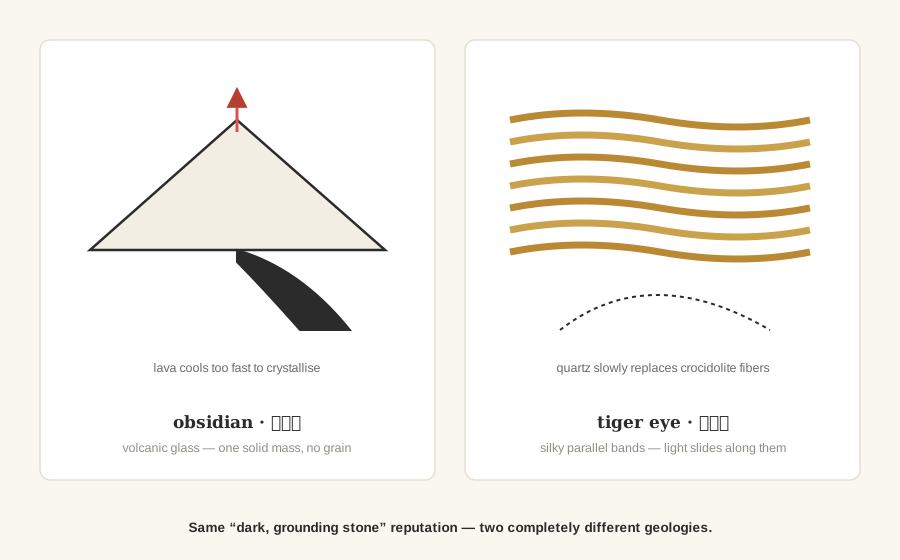
Walk any Chinese gem market and two dark stones dominate the protection counter: obsidian (黑曜石) and tiger eye (虎眼石). They get lumped together as "the black and gold grounding stones", but they are not even related — and knowing how each forms explains why they feel so different on the wrist.
Obsidian: volcanic glass
Obsidian is lava that cooled so quickly that no crystals formed — a natural glass, chemically closer to window glass than to stone. That "no grain, one solid decision" structure is probably behind its folk temperament: absorption and containment. In Chinese retail tradition obsidian is the classic grounding stone, and it is overwhelmingly carved as Pixiu — the wealth beast that "eats and never lets out". Black, swallowing, sealed: the stone and the myth agree with each other.

Tiger eye: quartz with a memory
Tiger eye started as parallel fibers of crocidolite (a blue asbestos-family mineral) that were slowly replaced, fiber by fiber, by quartz — the silica kept the original fiber structure and added its own golden iron staining. The result is that silky, sliding band of light called chatoyancy. Its folk temperament follows the structure: focus and direction — light that travels one way, attention that holds one line. Traders traditionally like it for exactly that reason.

Which one, then?
Tradition's shorthand: obsidian shields, tiger eye aims. If a reading wants containment and steadiness, obsidian; if it wants drive and concentration, tiger eye; both is a perfectly normal answer — they wear well together. And as always with our shop: the "metaphysical temperament" part is cultural tradition, not physics. The geology above, however, is just geology.
Our five-element mapping puts obsidian in water (black, deep, storing) and tiger eye in earth (yellow-brown, grounded). Which of the two your chart prefers is a two-minute quiz away — or browse both in the shop.
Want this read on your own chart?
Two minutes, full birth data, no email needed — see which element your chart can actually use.
Keep reading
The five wealth gods, decoded
What 五路财神 means, why five directions, and what the five colours stand for.
Read the article → StonesCaring for cinnabar & stone
Perfume, water, sunlight and storage — how to keep the beads looking their best.
Read the article → StudioHow we string, in Hangzhou
Cord, knots, and the checks every bracelet passes before it ships.
Read the article →