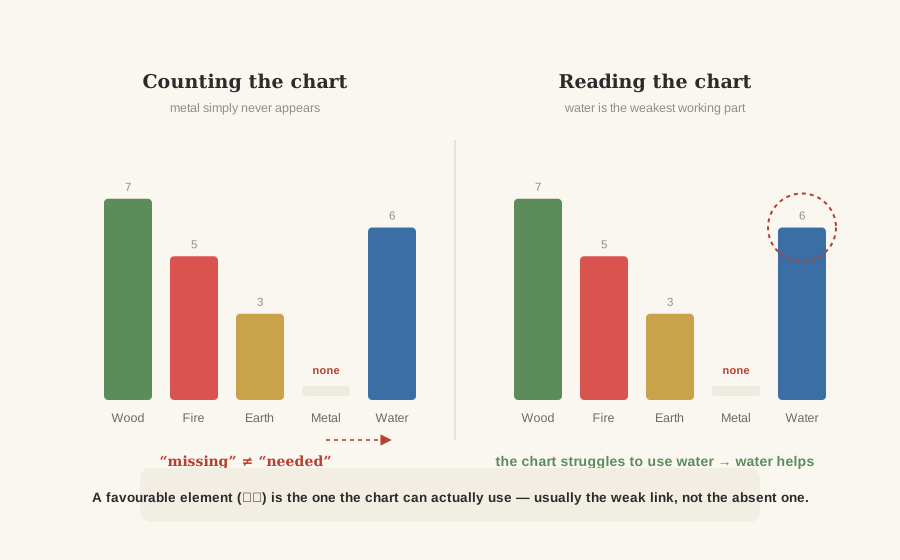
Here is the most common mistake in five-element advice — one that most free websites, and frankly most sellers, make daily:
"Your chart has no water. Buy something watery!"
It sounds logical. It is not how the tradition works. The classical framework distinguishes what a chart contains from what a chart can use. The technical term for the second one is yong shen (用神), usually translated "useful god" or "favourable element" — and finding it is the actual job of a reading.
A worked example
Imagine a chart that is strongly fire and earth — hot, dry, well-insulated, with no metal anywhere. Counting says "missing metal". But look at what the chart is doing: fire is fed by wood and produces earth, so its heat is being absorbed comfortably. The system is warm but not burning.
Now picture the same chart in a water-poor month, where the single weak water character is the only thing cooling it. That water is precious — every other element leans on it. Add more fire (or wood that feeds fire) and the whole system tips. Here, water is favourable even though fire is the "missing" nothing and water is technically present.
Why sellers get this wrong
"Missing element" advice survives because it is easy: count eight characters, sell the absent one. A real reading asks how the elements interact — which is stronger than it is, which is trapped, which is the pressure point. That takes the day and hour pillars, the season of birth, and a weighting of the stems against the branches. It is more work. It is also the difference between a chart and a tally.
Our quiz follows the reading logic, not the counting one: it weights all eight characters, checks the seasonal strength of each element, and only then names a favourable element. The mechanics are on our method page, and the calculation starts from the full birth data — including the hour most quizzes ignore.
Want this read on your own chart?
Two minutes, full birth data, no email needed — see which element your chart can actually use.
Keep reading
True solar time
Why 12:30 in Kashgar is not 12:30 in Shanghai — and how it can change your chart.
Read the article → CultureThe twelve zodiac animals
Beyond the stereotypes: what your birth-year animal traditionally stands for.
Read the article → CultureWhich wrist to wear it on
Left or right? What tradition says — and why it matters less than sellers claim.
Read the article →