Search "which wrist for a feng shui bracelet" and you will find absolute certainty in both directions. Here is what the tradition itself actually supports — considerably less than sellers claim, and slightly more interesting.
The folk rule: zuo jin, you chu
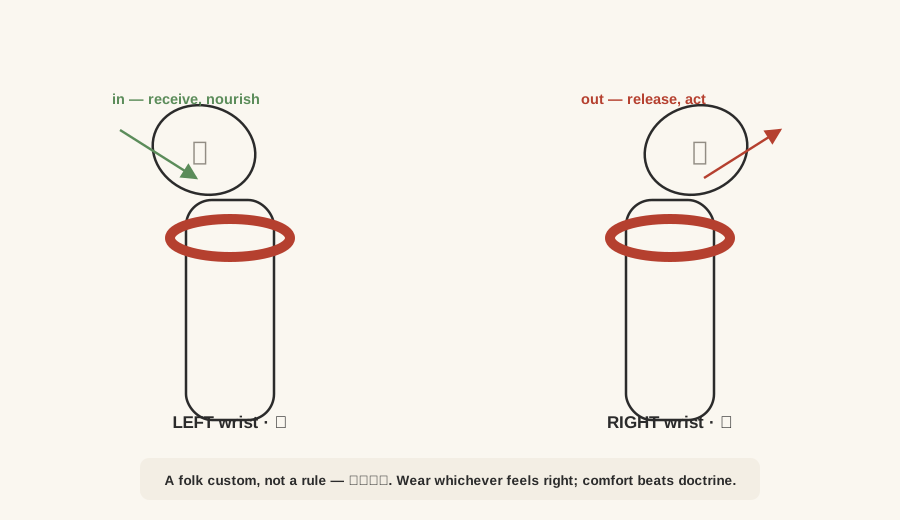
The custom most Chinese sellers reference is 左进右出 — in on the left, out on the right. The body is imagined as an energy circuit: the left side receives (luck, wealth, nourishing influences), the right side releases (toxins, negativity, what you want gone). Under that shorthand, a wealth-attracting piece goes on the left; anything meant to draw off bad energy — black obsidian, in particular — is worn on the right.
What the classical sources say
Very little, honestly. The zuo-jin-you-chu rule belongs to the modern retail layer of the tradition — the same layer that decided which hand wears a Pixiu. Classical medical texts do associate the left pulse with heart and blood and the right with lung and qi, and ritual texts treat left as the honourable side for receiving. The bracelet rules are a reasonable, popular borrowing of those older associations — worth knowing as provenance, not as physics.
The practical answer
- Dominant hand: wear on the non-dominant wrist. Less knocking, less sweat, elastic lasts years longer.
- Stacking: if you stack multiple pieces, hardest stones (obsidian, quartz) survive contact better than carved cinnabar — give cinnabar the inside position.
- Intention shorthand: receiving qualities on the left, releasing on the right, if you enjoy the custom.
However you wear it, sizing matters more than side — the size and care guide covers how a bracelet should actually sit on the wrist. And if you want the element before the wrist, that decision starts at the quiz.
Want this read on your own chart?
Two minutes, full birth data, no email needed — see which element your chart can actually use.
Keep reading
Red cords & your zodiac year
Why red is the colour of one's own year, and who traditionally wears it.
Read the article → StonesCinnabar: the red of tradition
Why 朱砂 shows up in every Chinese protection ornament — and what it is actually made of.
Read the article → StonesObsidian & tiger eye in Chinese wear
Grounding vs focus: the two temperaments people traditionally assign these stones.
Read the article →